
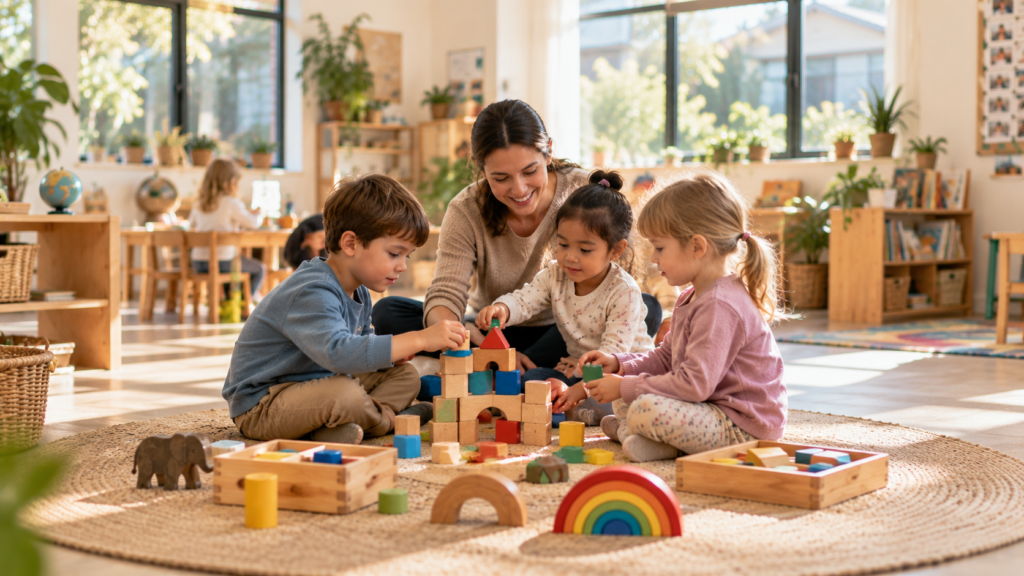
Play-Based Learning: Nurturing Growth in Early Education
Navigating the foundational years of a child’s development can feel like a profound responsibility for educators and parents alike. Understanding the most effective approaches to learning is paramount in shaping young minds. This exploration offers a thoughtful pathway through the science behind play-based learning, particularly within the context of Australian early education frameworks, providing clarity on its profound impact.
For people considering a career in early childhood education, understanding how children learn through play is an important part of developing effective educational and care practices. The CHC30125 Certificate III in Early Childhood Education and Care can help learners build the practical knowledge and skills needed to support children’s development in early learning environments. This post will illuminate why embracing learning through play is not just enjoyable, but essential for holistic child development.
Understanding Play-Based Learning
At its heart, play-based learning is an approach that acknowledges play as a child’s natural and primary mode of engaging with the world. It is not merely unstructured recreation but a thoughtfully designed environment where children are empowered to explore, discover, and construct their understanding through self-initiated and teacher-guided activities. This foundational method empowers children to lead their own learning journeys, inviting curiosity and active participation.
In Australia, play-based learning is embedded in the Early Years Learning Framework (EYLF), which guides early childhood education practice. It supports five key outcomes: identity, connection, wellbeing, confident learning, and communication. Meaningful play helps children develop these skills through exploration, creativity, problem-solving and interaction.
Play-based learning environments encourage children to make choices, solve problems and collaborate while developing cognitive, social and emotional skills. Educators guide this process by creating meaningful play experiences and observing children to extend their learning.
The approach is also adaptable to each child’s interests and developmental stage. From building with blocks to dramatic or sensory play, children explore, communicate and make sense of their world while developing skills that support future learning.
Brain and Development Benefits
The scientific evidence overwhelmingly supports the profound benefits of play-based learning on a child’s developing brain and overall well-being. During early childhood, the brain undergoes rapid development, forming billions of neural connections. Play provides the rich, stimulating experiences necessary for these connections to flourish, literally shaping brain architecture.
Through engaging in diverse play scenarios, children naturally develop executive function skills, which are crucial for success in school and life. These include working memory, flexible thinking, and self-regulation. For instance, negotiating roles in imaginative play enhances social problem-solving, while building complex structures from loose parts strengthens spatial reasoning and planning. These seemingly simple acts are powerful catalysts for cognitive growth.
Beyond cognition, play is a vital pathway for emotional regulation and social competence. Children learn to understand and manage their feelings as they navigate the joys and frustrations of collaborative play. They develop empathy, learn to share, take turns, and resolve conflicts, laying the groundwork for positive relationships and resilient emotional health. This holistic approach to child development ensures that children are not just accumulating facts, but are growing into well-rounded, capable individuals.
Physical development is also inherently supported by active play, both fine and gross motor skills are refined through running, jumping, climbing, drawing, and manipulating small objects. Such activities are essential for developing coordination, balance, and dexterity, which are prerequisites for many later learning tasks, including handwriting. The comprehensive impact of learning through play on every aspect of a child’s growth underscores its irreplaceable value in early education.
Play and Early Literacy/Numeracy
The integration of play-based learning is remarkably effective in building foundational literacy and numeracy skills, often in ways that feel organic and enjoyable to children. Rather than formal drills, children encounter numbers, letters, and concepts within meaningful contexts. This approach cultivates a genuine love for learning, making abstract concepts accessible and engaging.
Consider early literacy: storytelling during dramatic play enhances vocabulary and narrative skills. Children might create signs for their pretend shop, experimenting with letter recognition and early writing. Listening to diverse books during quiet play times nurtures phonological awareness, while a print-rich environment fosters curiosity about words. These experiences, embedded within play, build a strong foundation for reading and writing without pressure.
Similarly, numeracy concepts naturally emerge through play. Counting blocks, sorting toys by size or colour, measuring ingredients in a mud kitchen, or discussing how many children can fit on a swing all introduce mathematical ideas. Children grasp concepts of quantity, pattern, and problem-solving through hands-on interaction. This active exploration makes mathematical thinking concrete and relevant to their everyday experiences.
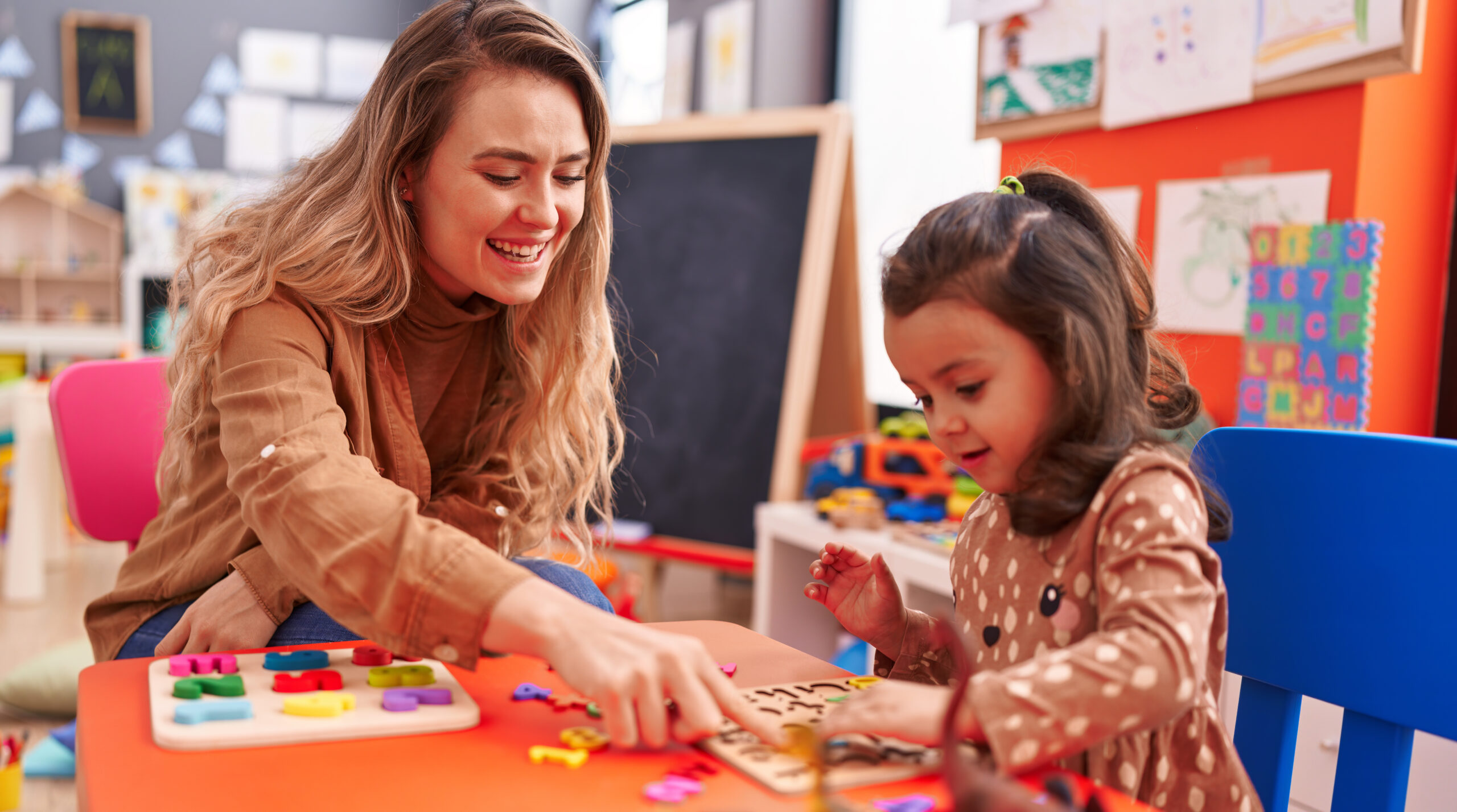
The EYLF encourages educators to intentionally plan play experiences that support these vital developmental areas. By observing children’s play, educators can introduce provocations or guiding questions that extend their thinking, deepening their understanding of literacy and numeracy. This thoughtful facilitation ensures that how play builds literacy and numeracy is not left to chance but is a deliberate and dynamic part of the curriculum. The power of play lies in its ability to seamlessly weave crucial learning into every moment of childhood discovery.
The Educator’s Role in Extending Play
While play-based learning often appears child-led, the role of the educator is far from passive; it is an active, thoughtful, and highly skilled one. Educators are the architects of the play environment, creating spaces rich with possibilities and carefully selected materials that invite exploration and discovery. Their deliberate actions transform mere recreation into profound learning opportunities.
Educators observe children closely, understanding their interests, strengths, and areas for growth. This keen observation informs their decisions about when to step in, when to stand back, and how to gently guide. They might offer a new piece of equipment, pose an open-ended question, or introduce a relevant book to extend a child’s current line of inquiry. This responsive engagement is crucial for deepening learning.
People also ask
Inclusive Early Learning in Australia: Supporting Children With Additional Needs

The EYLF Explained Simply: What Your Child Is Learning in Childcare

School Readiness in Australia: A Practical EYLF-Aligned Guide For Parents

Universal Childcare Explained: A Guide for Australian Families
Preschool in Australia: Ages; Hours; Costs; and What’s Changing in 2025

Child Care Subsidy (CCS) in Australia 2025: How Much You Could Save and How to Claim

A key aspect of this role is intentional teaching within a play context. This means educators have clear learning objectives in mind but deliver them through play-based methods. For example, if a group of children is building a bridge, an educator might introduce concepts of stability, measurement, or different types of materials, integrating scientific and mathematical language naturally. They also model positive social interactions, language use, and problem-solving strategies, creating a supportive and inspiring atmosphere.
The educator’s presence provides a secure base for children to take risks, experiment, and learn from their mistakes. They celebrate efforts, encourage perseverance, and foster a sense of belonging. Through their thoughtful facilitation, educators ensure that every child’s unique learning journey is respected and enriched, highlighting the profound importance of their professional guidance in early education in Australia.
Diverse Play Ideas by Age Group
Tailoring play experiences to suit different age groups is essential for maximizing their developmental impact. While the core principles of learning through play remain consistent, the specific activities and materials will evolve with a child’s growing capabilities and interests. Understanding these nuances helps educators and parents create truly engaging and effective environments.
Infants (0–12 months): Sensory exploration is paramount. Activities like tummy time with engaging textures, reaching for safe objects, singing songs, and gentle touch provide crucial neurological stimulation. Simple interactions like peek-a-boo foster object permanence and social connection. The focus is on responsive care and building secure attachments through playful interaction.
Toddlers (1–3 years): Toddlers thrive on movement and hands-on exploration. Activities might include pushing and pulling toys, stacking blocks, exploring water tables, simple puzzles, and early dramatic play with dolls or household items. Language development flourishes through naming objects, singing, and simple conversations that accompany their play. This age group benefits immensely from opportunities to assert independence within safe boundaries.
Preschoolers (3–5 years): Preschoolers are ready for more complex imaginative and constructive play. Opportunities for elaborate role-playing, building intricate structures with various materials, engaging in art projects, and early board games are highly beneficial. Group games that involve rules and cooperation help develop social skills and self-regulation. These experiences reinforce the benefits of play in preschool, preparing children for formal schooling with a strong sense of curiosity and capability. Understanding these age-appropriate pathways ensures that play remains challenging and enriching.
Spotting High-Quality Play Programs
Recognizing a truly effective EYLF play-based curriculum is crucial for parents and educators seeking the best environments for children. A high-quality program goes beyond simply having toys; it reflects a deep understanding of child development and intentional pedagogical practice. Being able to identify these key indicators ensures children are in truly enriching settings.
First, observe the children: Are they engaged, curious, and initiating their own play? Do they have choices in activities and access to a wide range of open-ended materials like blocks, natural resources, art supplies, and dress-up clothes? A vibrant program shows children actively exploring, collaborating, and problem-solving, rather than passively observing or rigidly following instructions.
Second, assess the educators’ role: Are they actively observing, asking questions, and extending children’s learning? Do they engage in meaningful conversations and facilitate social interactions? High-quality educators are not just supervisors; they are thoughtful guides who support and challenge children, demonstrating a clear understanding of the principles of play-based learning. Their interactions should be warm, responsive, and respectful.
Consider the environment itself: Is it safe, stimulating, and organized? Are there clearly defined areas for different types of play, such as quiet corners, creative zones, and active spaces? Is there a balance between indoor and outdoor play opportunities? A well-designed environment invites exploration and caters to diverse interests and learning styles. Observing these elements provides a comprehensive picture of a program’s commitment to fostering deep and meaningful learning through play.
Key Takeaways Box
- Play-based learning is a purposeful, child-led approach integral to Australian early education.
- It fundamentally shapes brain development, fostering cognitive, social, and emotional skills.
- Play naturally integrates foundational literacy and numeracy into meaningful experiences.
- Educators play a crucial role in designing rich environments and extending children’s learning.
- High-quality programs prioritize active engagement, diverse materials, and skilled educator facilitation.
Embracing play-based learning offers a powerful and proven pathway to nurturing holistic child development. It acknowledges the innate curiosity of children and provides a framework for growth that is both joyous and profoundly impactful. For those dedicated to shaping the next generation, understanding and implementing these principles is not just an advantage, but a necessity. This thoughtful approach ensures that every child receives the best possible foundation for a future filled with learning and success.
Discover Your Path in Early Childhood Education Today
Explore courses and career opportunities at ACTAC